

Only workspace admins can adjust these settings on the following plans:
- Enterprise
- Legacy paid plans
Overview
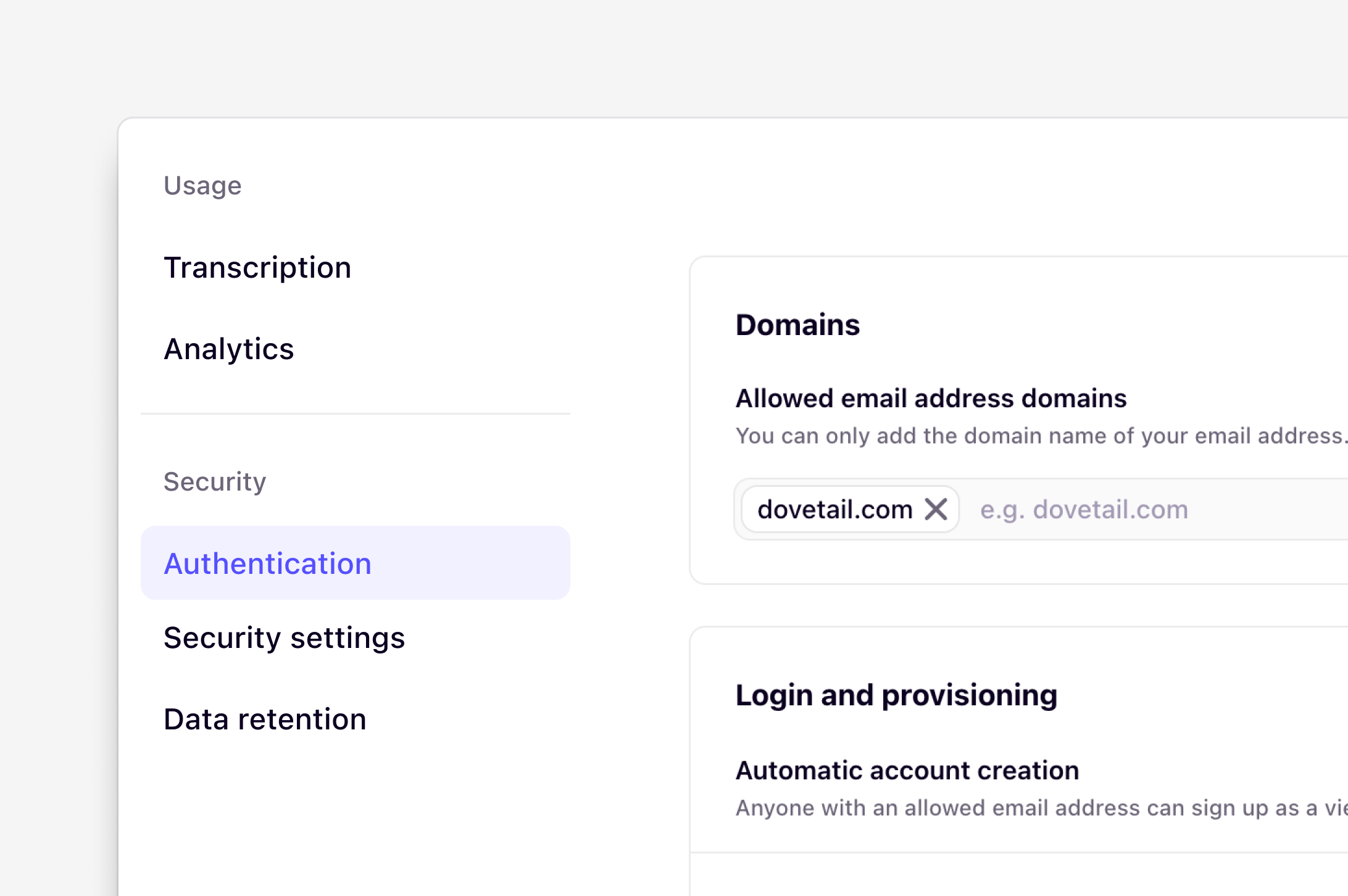
Workspace admins can streamline and manage user authentication to Dovetail. Use Authentication settings to set allowed email domains, enable automatic account creation, choose what methods users can use to sign up, and log in to the workspace.Set allowed email domains
Admins can set allowed email domains for your workspace so that they can be used for automating user provisioning. If there is a diamond on the Authentication tab, you are on a plan that does not support this feature.- To do this, ⚙️ Settings → Authentication, and enter your allowed email domain under Domains. Please note that you can only add the domain name of the email address you currently have in your email address to log into the workspace.
- Once entered, this will be automatically saved and applied to your workspace.
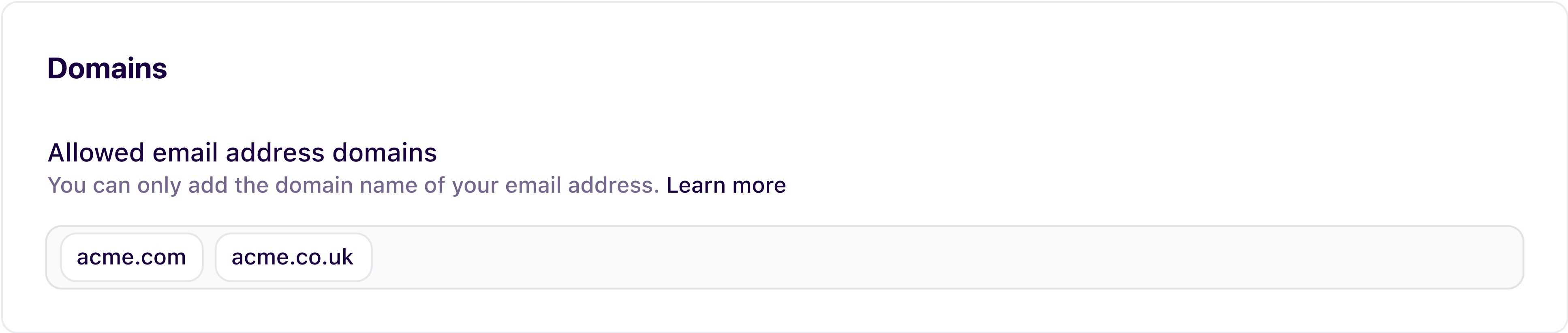
If you are trying to add a separate email domain to your own, please have a workspace admin reach out to support@dovetail.com, and our team will be happy to help. If you are chatting via the app messenger, request to speak to our support team, and Fin, our AI agent, can route you to the team.
Automatic account creation
Enable automatic account creation to allow your colleagues who share an email domain with one of your allowed email domains to join your workspace as a viewer, without needing an invite.Please note that:
- Viewers are only available on select legacy plans and our Enterprise plan.
- Automatic account creation is enabled by default.
- Managing automatic account creation is only available on the Enterprise plan and legacy paid plans
Authentication options
Available on the Enterprise plan
- Password: Use an email address and create a password to log in.
- Google: Use your Google account email and password to sign up and log in to Dovetail.
- Microsoft: Use your Microsoft account email and password to sign up and log in to Dovetail.
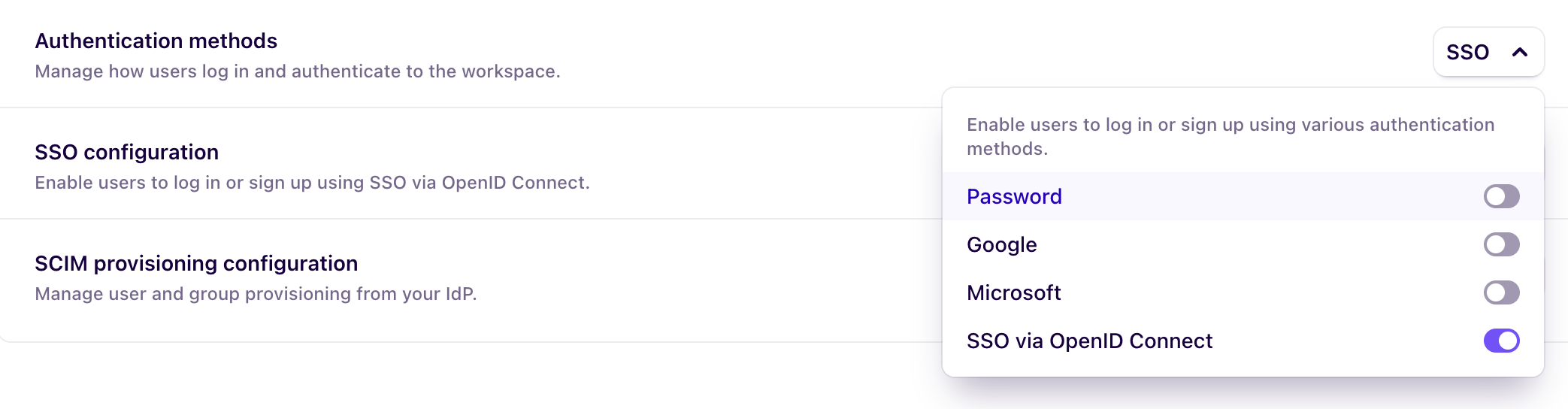
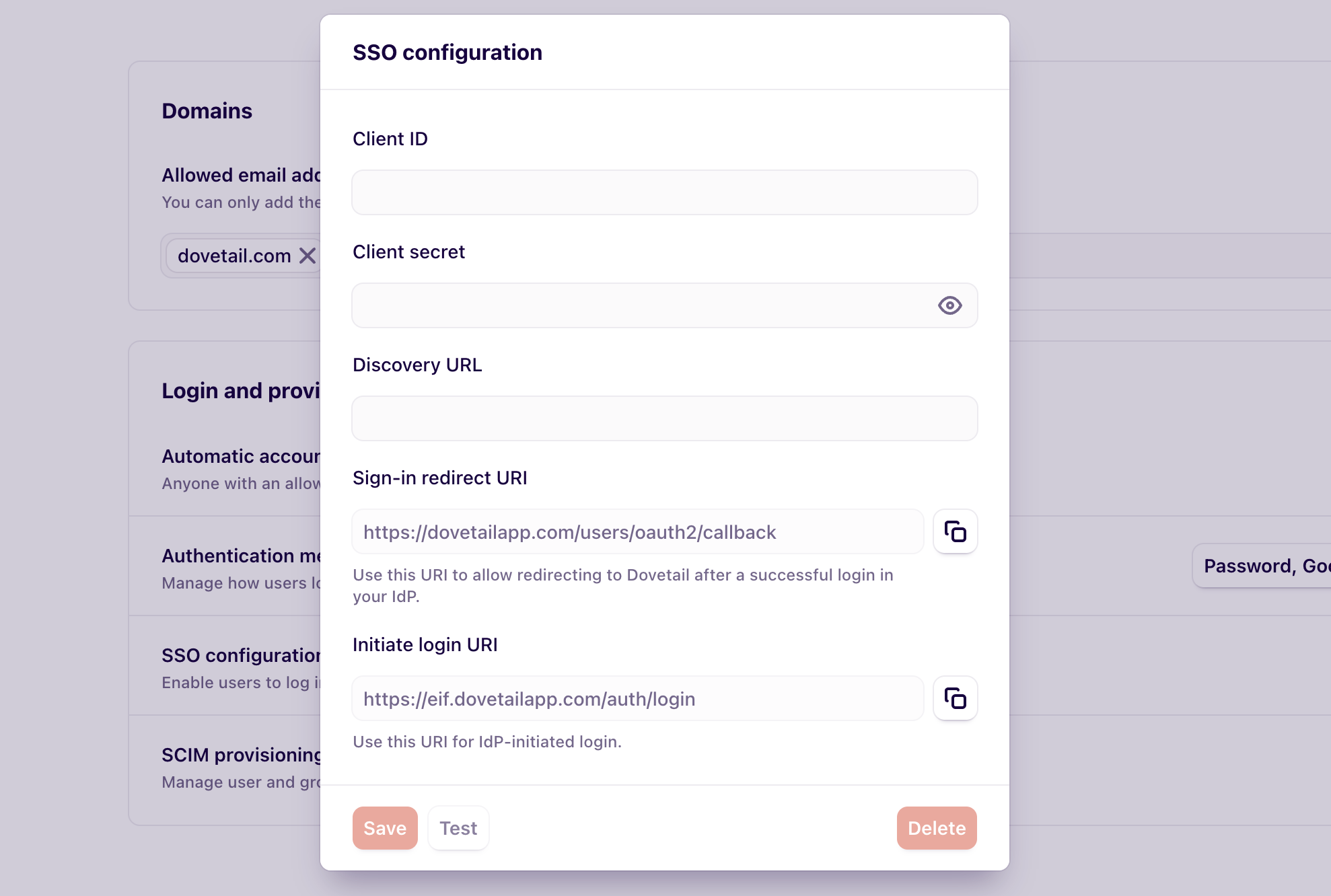
Single sign-on (SSO) settings
Available on the Enterprise plan
SCIM provisioning
Available on the Enterprise plan
Two-factor authentication
Available on all plans