Ideas vs Evidence
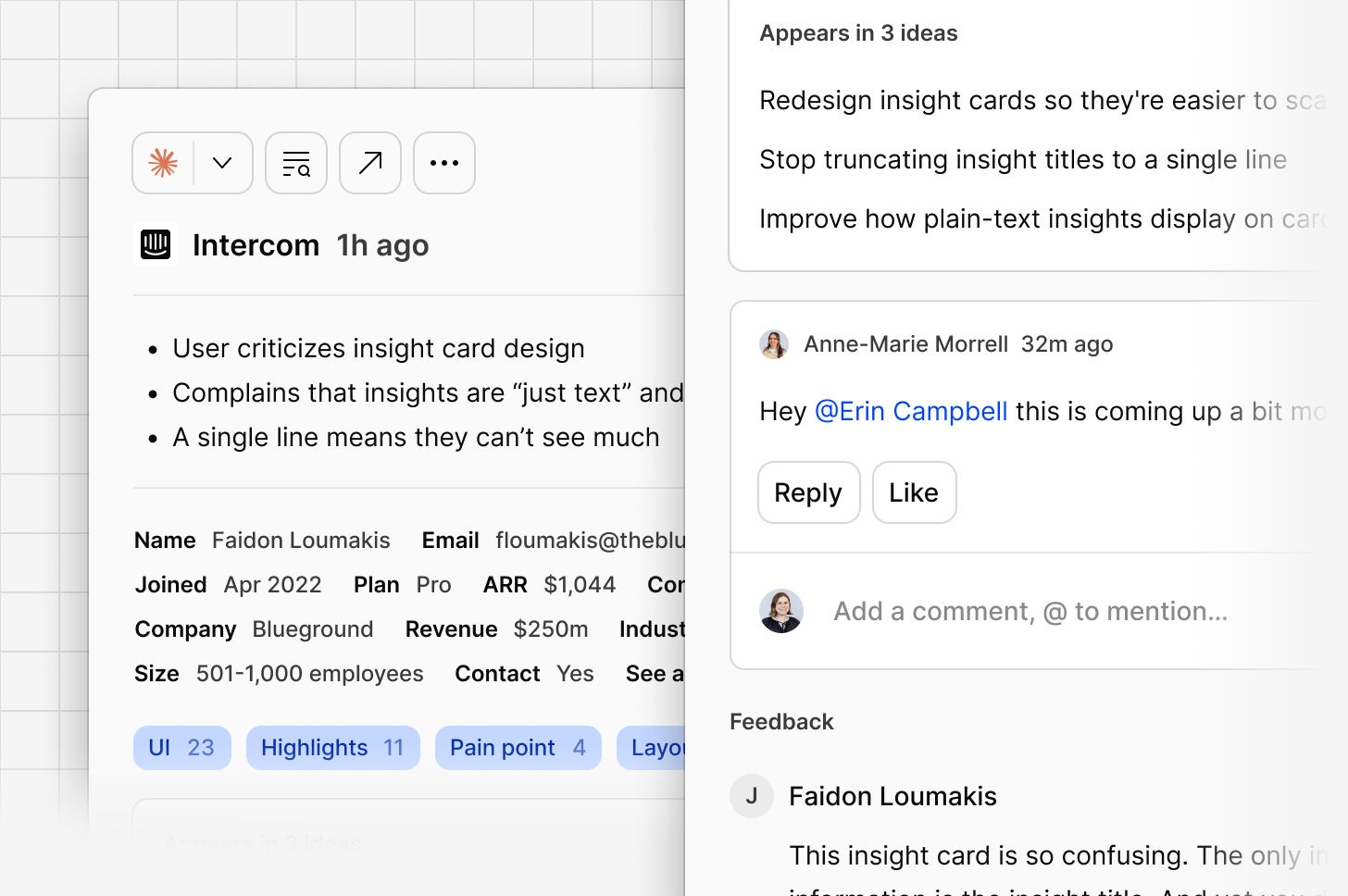
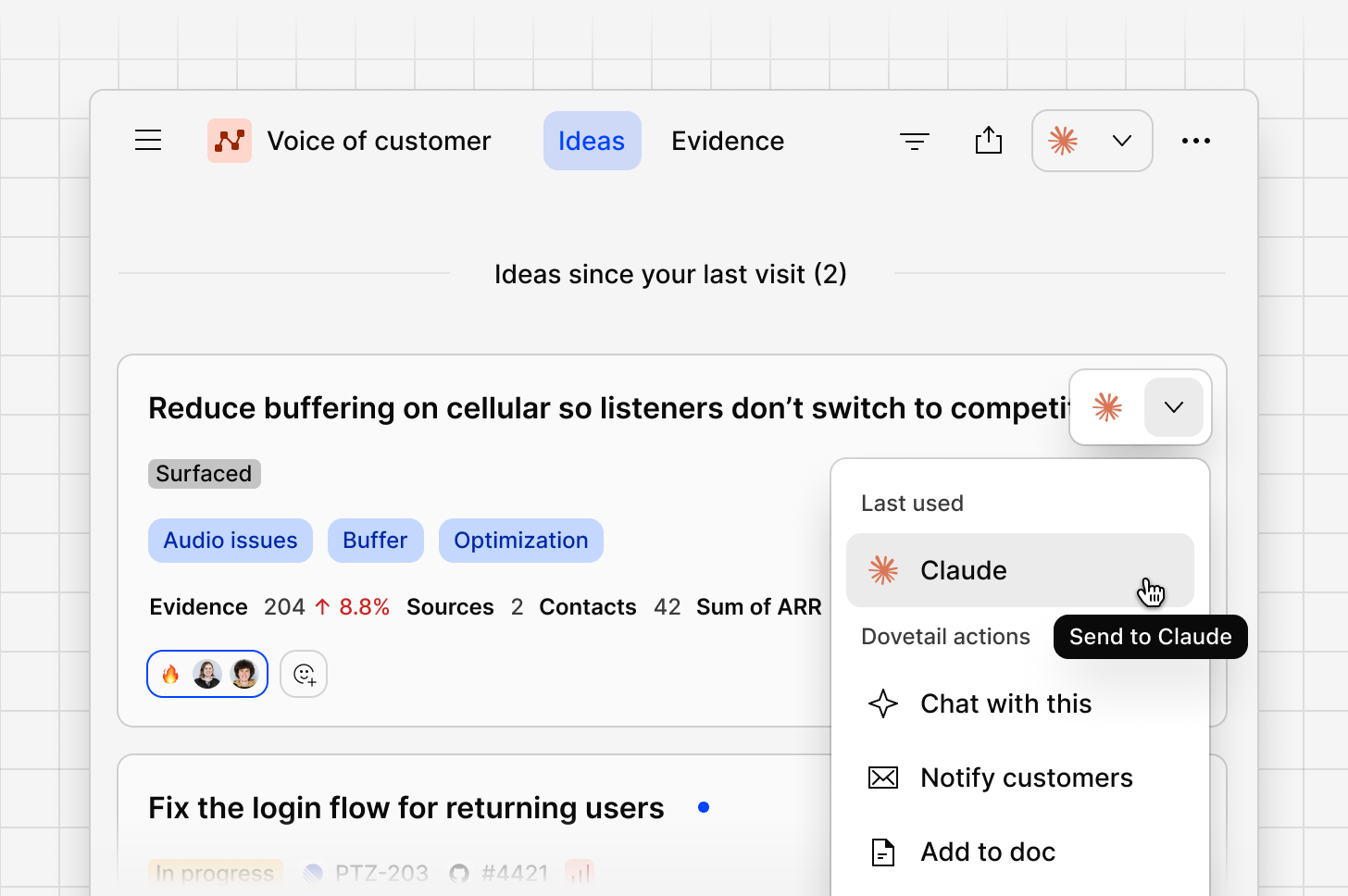
Channels 2.0 organises everything you see into two views.Ideas are AI-generated, opinionated summaries of what’s worth doing next, based on the consolidation of all your high-volume feedback. Each idea groups together the feedback pointing at the same underlying problem or request, and is ranked by how much it matters: your business context, how often it comes up, how many acounts are affected, and how much ARR sits behind it.
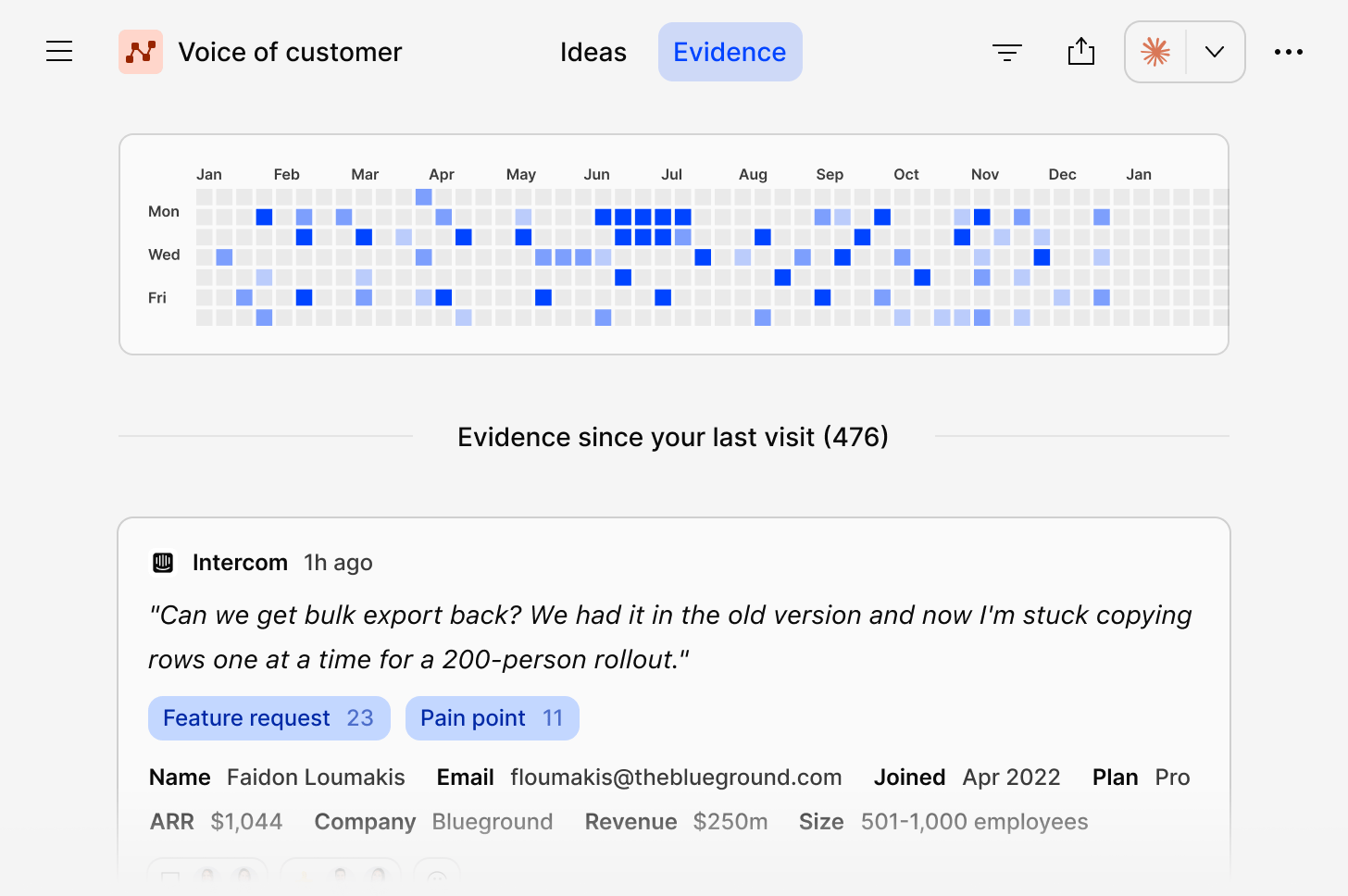
Evidence is the raw material behind every idea: the original support tickets, reviews, survey responses, and conversations. Use Evidence to check a claim, pull a quote, or see exactly who said what.
How Channels work
Channels 2.0 is built around four stages. Feedback in. You connect your data sources and scope the channel to what you care about. You can consolidate all of your sources into a single channel, so that you have a combined voice of customer channel. Or you can create separate channels for different sources or areas. Ideas surfaced. As data flows in, Channels groups it into ideas, ranked by severity, frequency, reach, and business context such as ARR. Dovetail will utilise any workspace docs as context to help generate ideas and ensure the right evidence is attached. Team acts. From any idea, send to Jira, Figma Make, Linear, or Claude, comments, assign an owner, and track progress without leaving the feed. Close the loop. When an idea is resolved, Channels enables you to notify the customers whose feedback contributed to it, driving loyalty and engagement.Create a new channel
- From your workspace, select
New channel. - Connect
data source. Map your databy configuring your source- Input context and select focus area
keywords, oradd your own, to shape how the AI classifies and surfaces feedback from the start. Link any relevantworkspace docs, such as a strategy or tone of voice doc, to sharpen this further. - Choose whether you wish to automatically redact PII or not.
- Connect at least one data source to get your first analysis running.
- Give your channel a
namethat reflects its focus area, for example “Mobile app retention” or “Enterprise onboarding.”
Connect your data source(s)
When you create a channel, every data source already connected to your workspace is available immediately. You can also connect a new source directly from the channel. Supported sources include:- App store
- API
- Canny
- CSV
- Discord
- Freshdesk
- Front
- G2
- Gong
- Google Play reviews
- Grain
- HubSpot Service Hub (conversations and tickets)
- Intercom
- Jira Service Management
- Pendo
- PostHog
- Qualtrics
- Salesforce Service Cloud
- ServiceNow CSM
- Slack
- Snowflake
- Sprig
- Usersnap
- Zapier
- Zendesk
- Zoho Desk
Manage data sources
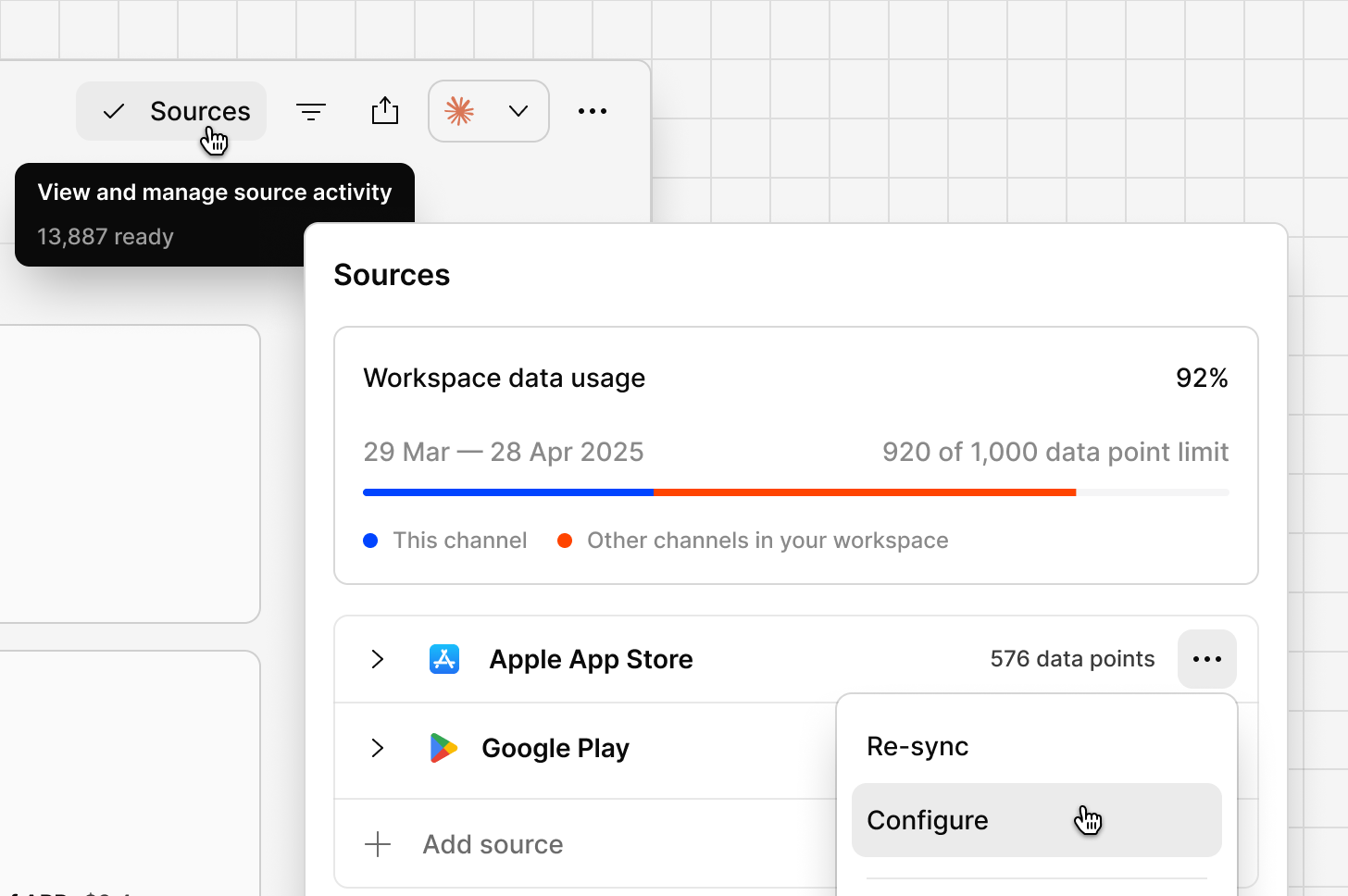
After adding a source to the channel, you can then configure what metadata fields you wish to display and filter. This can be edited at anytime by:- Click on the
Sourcesin the Channel heading - Find and hover over the source that you wish to change
- Select the
...more menu - Select
Configure - Make any necessary changes, and select
Save
You can add as many sources as you like to the channel.
Sources dialog, you can see every source connected to a channel, when it last synced, and add or remove sources without affecting existing data.
Removing a source stops new data from that source flowing in. Data already imported stays in the channel.
Adding context to your Channel
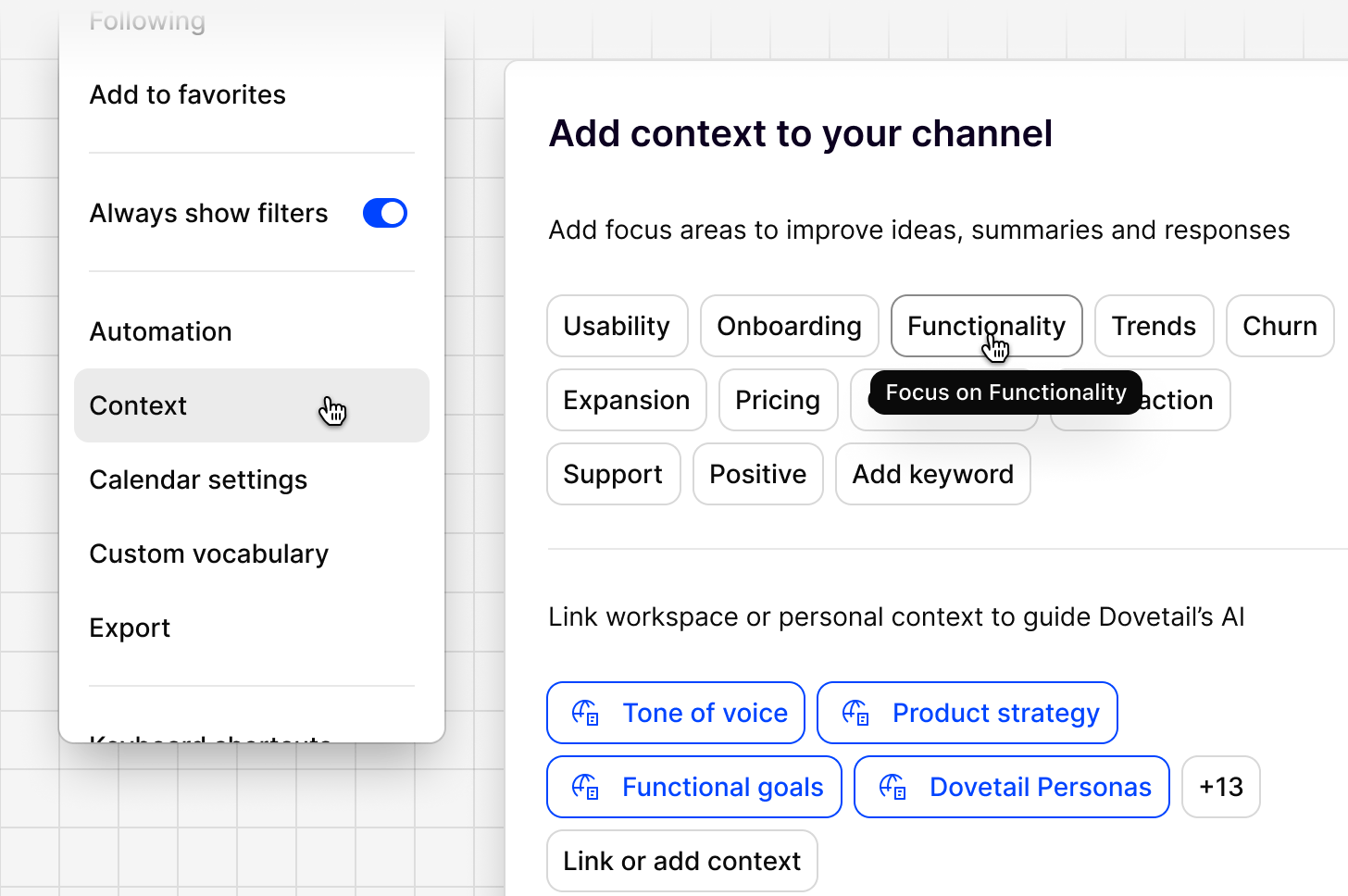
Context helps Channels generate better ideas, summaries, and responses by telling the AI what to focus on and what you already know about your business. You will be prompted to set the Channel context during onboarding but this can be changed at any time. To do so, all you need to do is:- Click the
...menu in the top right corner of the Channel - Select
Contextto configure two sections: - Focus areas. Select from suggested keywords such as
Usability,Onboarding,Functionality,Trends,Churn,Expansion,Competitors,Satisfaction, andSupport, or add your own withAdd keyword - Linked context docs. Link a workspace or personal doc, such as a strategy doc or tone of voice guide, to guide how Dovetail’s AI interprets and writes about your feedback. Docs already in your workspace are suggested automatically, or use
Link or add contextto attach something new. - Click
Saveto apply your changes.
Contact syncing
Contact details shown on Ideas and Evidence (name, company, ARR, plan tier, and so on) come from your Contacts database, enriched from your CRM. Channels supports enrichment from either Salesforce or HubSpot. A workspace can only have one CRM enrichment source connected at a time.- For Salesforce setup, see Salesforce contacts.
- For HubSpot setup, see HubSpot Contacts.
Ideas
The Ideas feed is a ranked list of what’s worth acting on, most important first.Status, priority, assignee
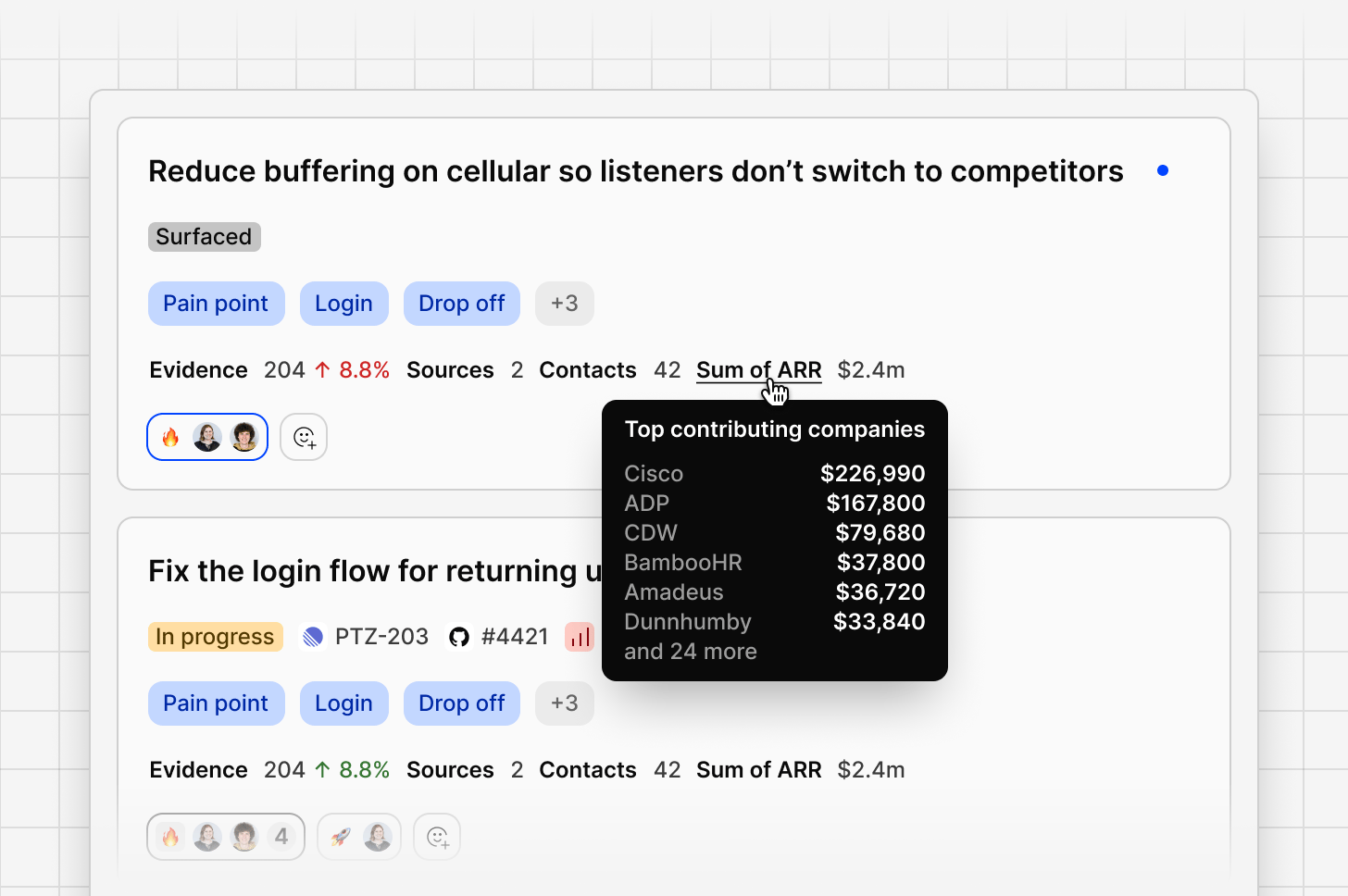
Each idea moves through a lifecycle: Surfaced → Assigned → In progress → Resolved. Set a priority manually, and assign an idea to a teammate so ownership is clear.Roll-up breakdown
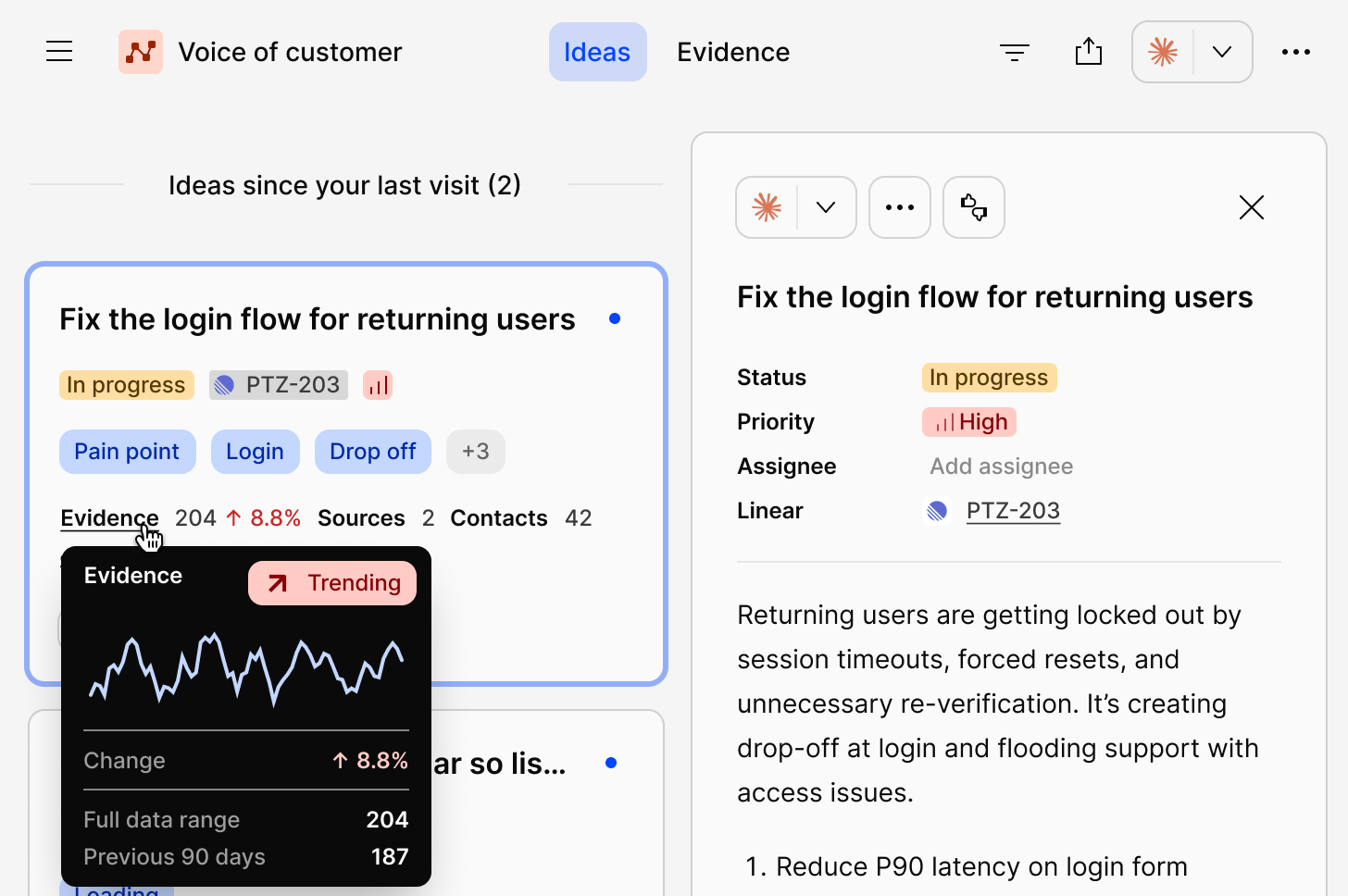
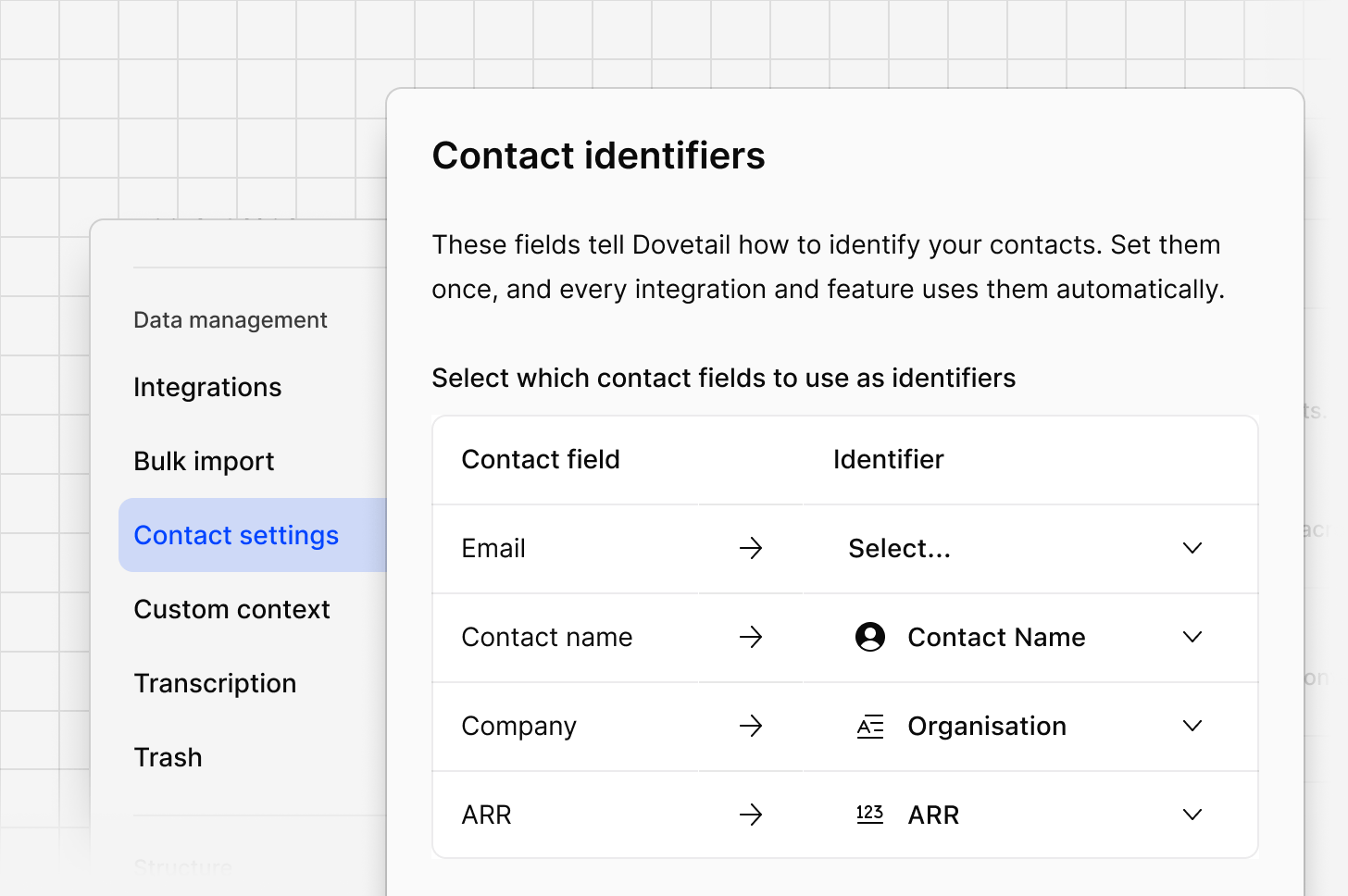
Every idea shows a roll-up of the evidence behind it: number of data points, sources, contacts, and total ARR represented. This rollup is managed through your contact identifiers, which can be accessed in Dovetail by going toSettings → Contact Settings → Contact Identifiers → Configure.
Comments
Use @mentions to bring in a teammate, or to reference other objects in your workspace, such as a Project, a Doc, or another Channel, so people can jump straight to the relevant context without leaving the conversation.Over-time trending visualisation
Each idea includes a trend over time graph, showing how signal volume has changed. A rising sparkline means the issue is becoming more prominent; a flat or declining one suggests it’s stabilising. Ideas with no recent activity are marked Dormant. Open the full over-time chart on an idea to see demand across your selected date range, useful for spotting whether something is seasonal, tied to a release, or steadily growing.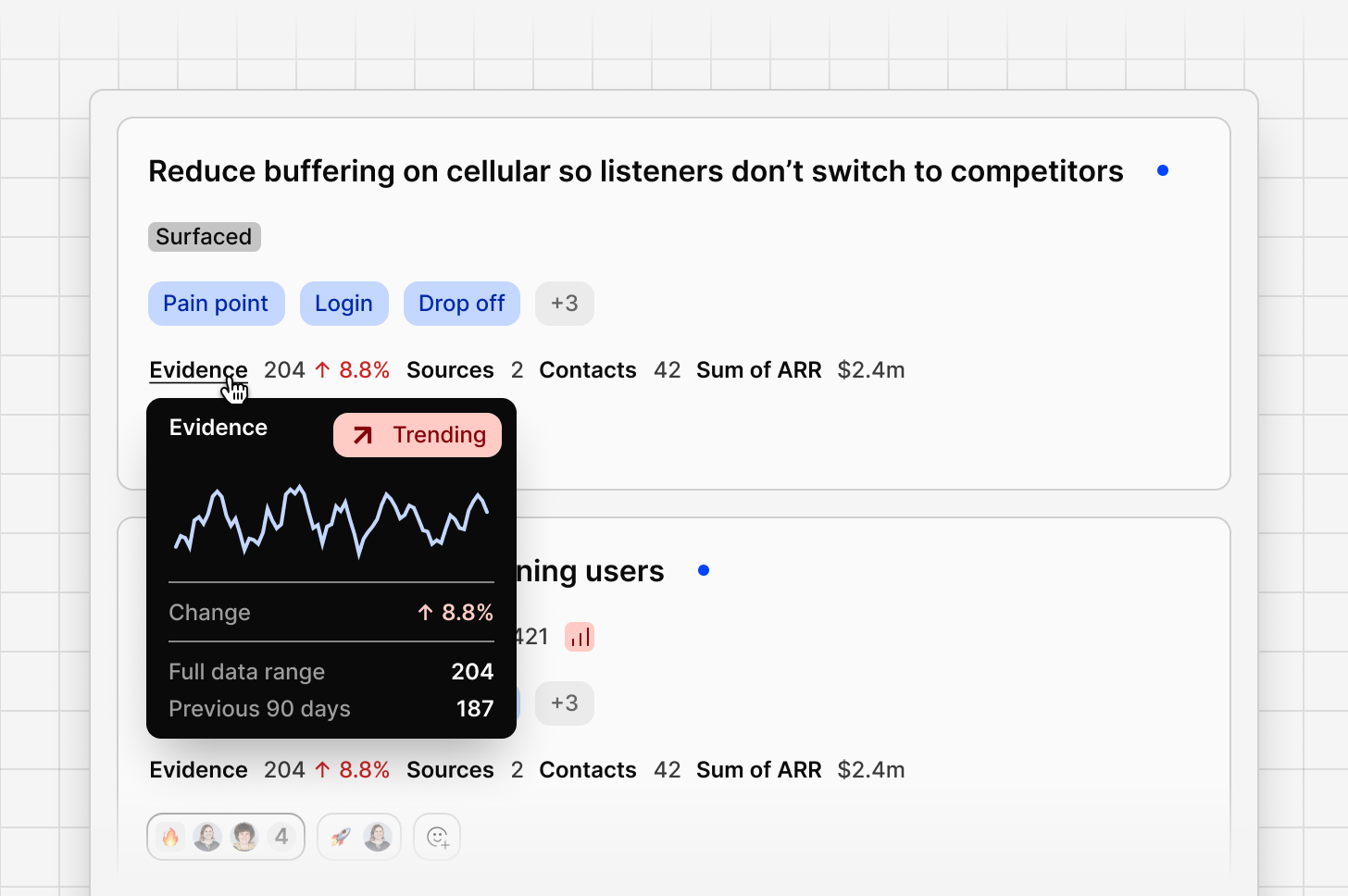
Entities and tags
Entity tags on each idea card show the topics, features, and product areas extracted automatically from the underlying evidence. Filter the whole feed by an entity to see only ideas related to that topic.Rename, merge, and archive
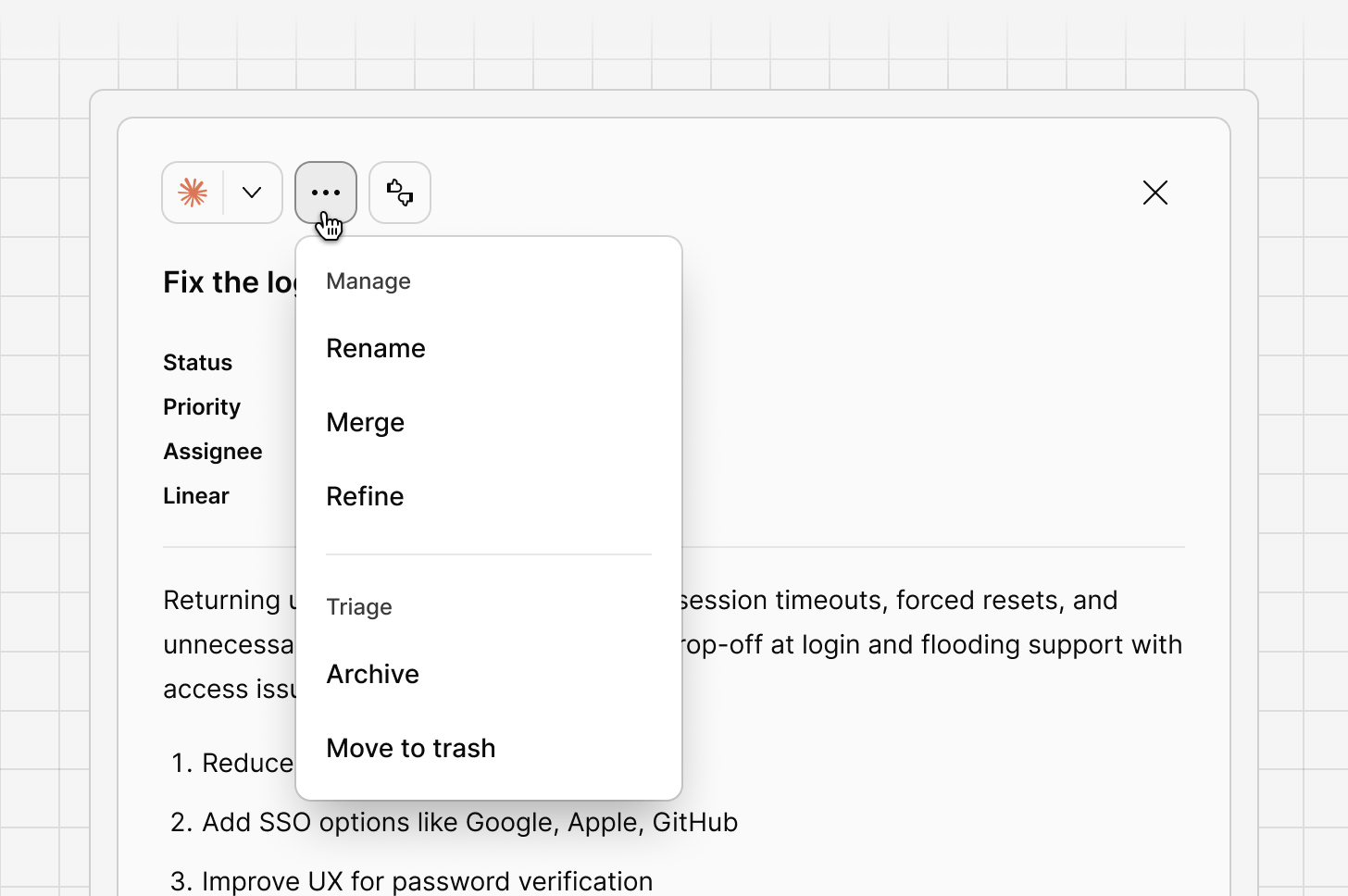
You’re always in control of how ideas are organised:Renamean idea’s headline in your own words.Mergeoverlapping ideas into a single, clearer one.Archivean idea that’s no longer relevant.
Closing the loop
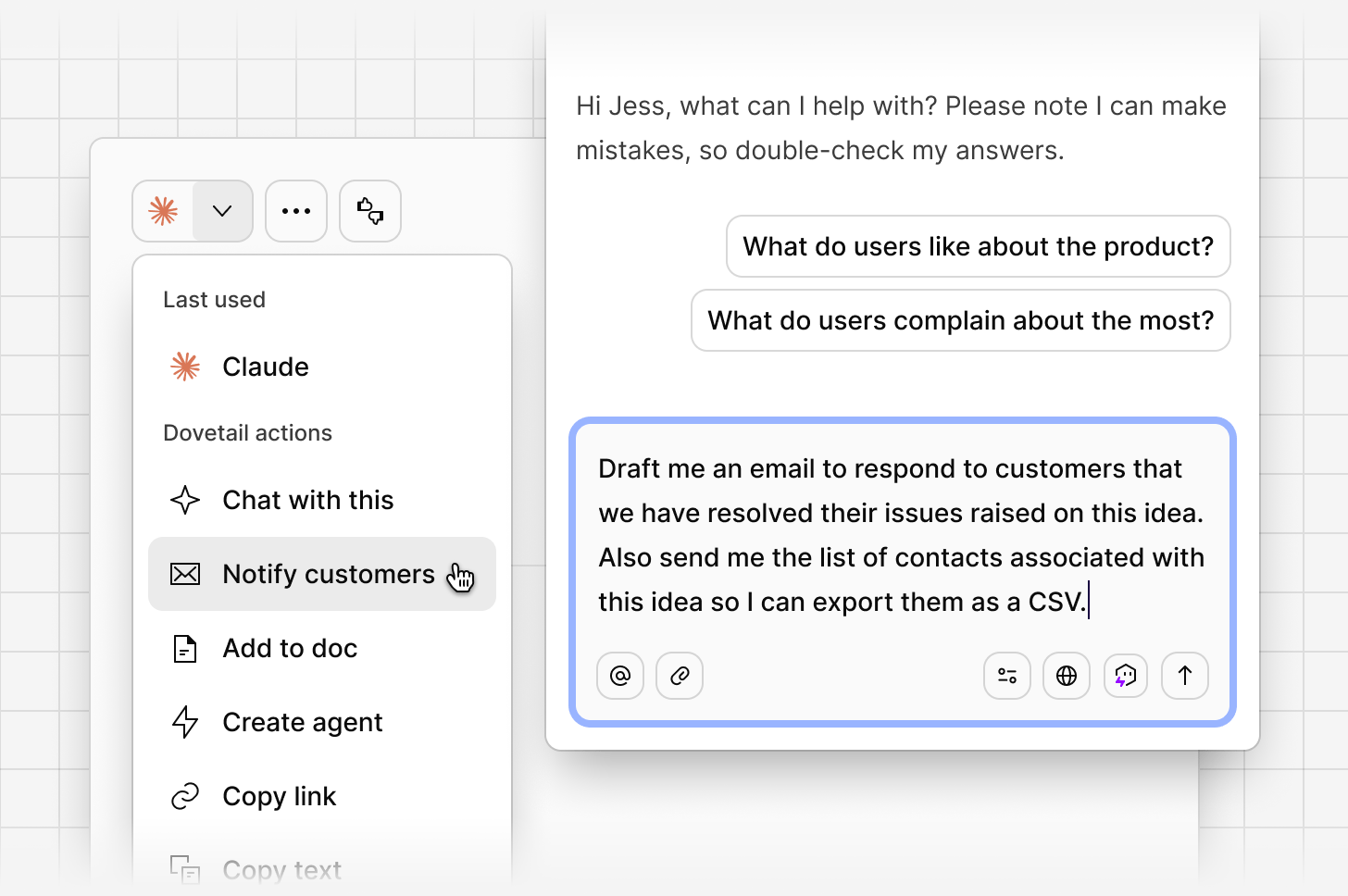
When you move an idea to Resolved, use theNotify customers action to draft and send a personalised update to the contacts whose feedback contributed to it. Dovetail generates the complete CSV list of contacts that have associated with that idea. You can use chat to review the message, make any edits, and send it from your own email client.
Sort, filter and save views
Sort and filter
UseSort by to order the feed by activity, priority, severity, sentiment, data points, and more, including custom rollups like plan or industry.
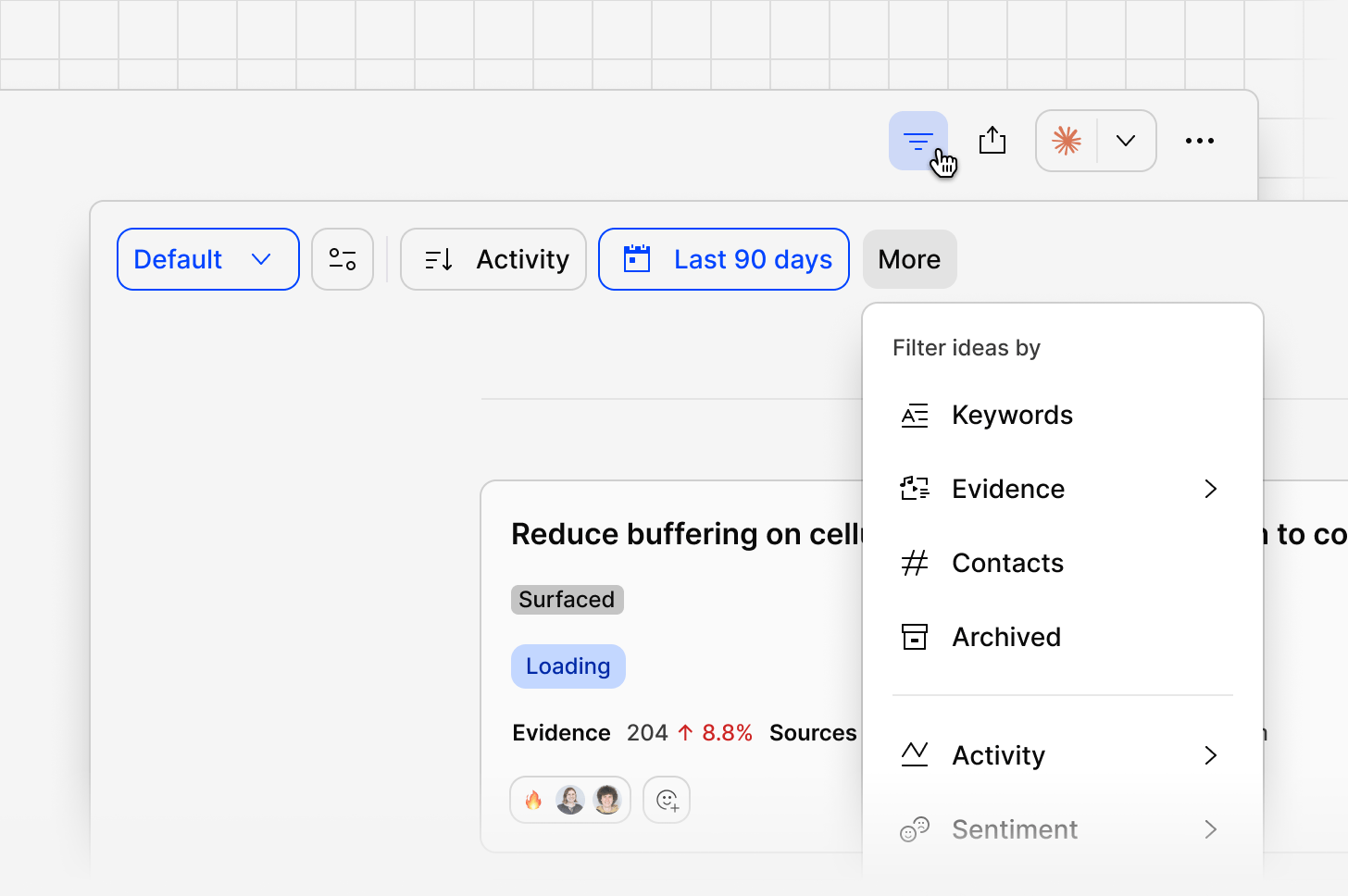
Use More to filter by fields such as entity, intent, ARR, contacts, owner, and archived status. Filters stack, so you can combine, for example, Entity and Intent to narrow to a precise slice of feedback.
Saving views
Save a specific combination of filters and sort order as a view, so your team can return to the same slice of feedback without rebuilding it each time. This is a shared way for different squads or product areas to work from the same feed. For example, segmenting and saving views based on product area, industry, region, revenue, etc.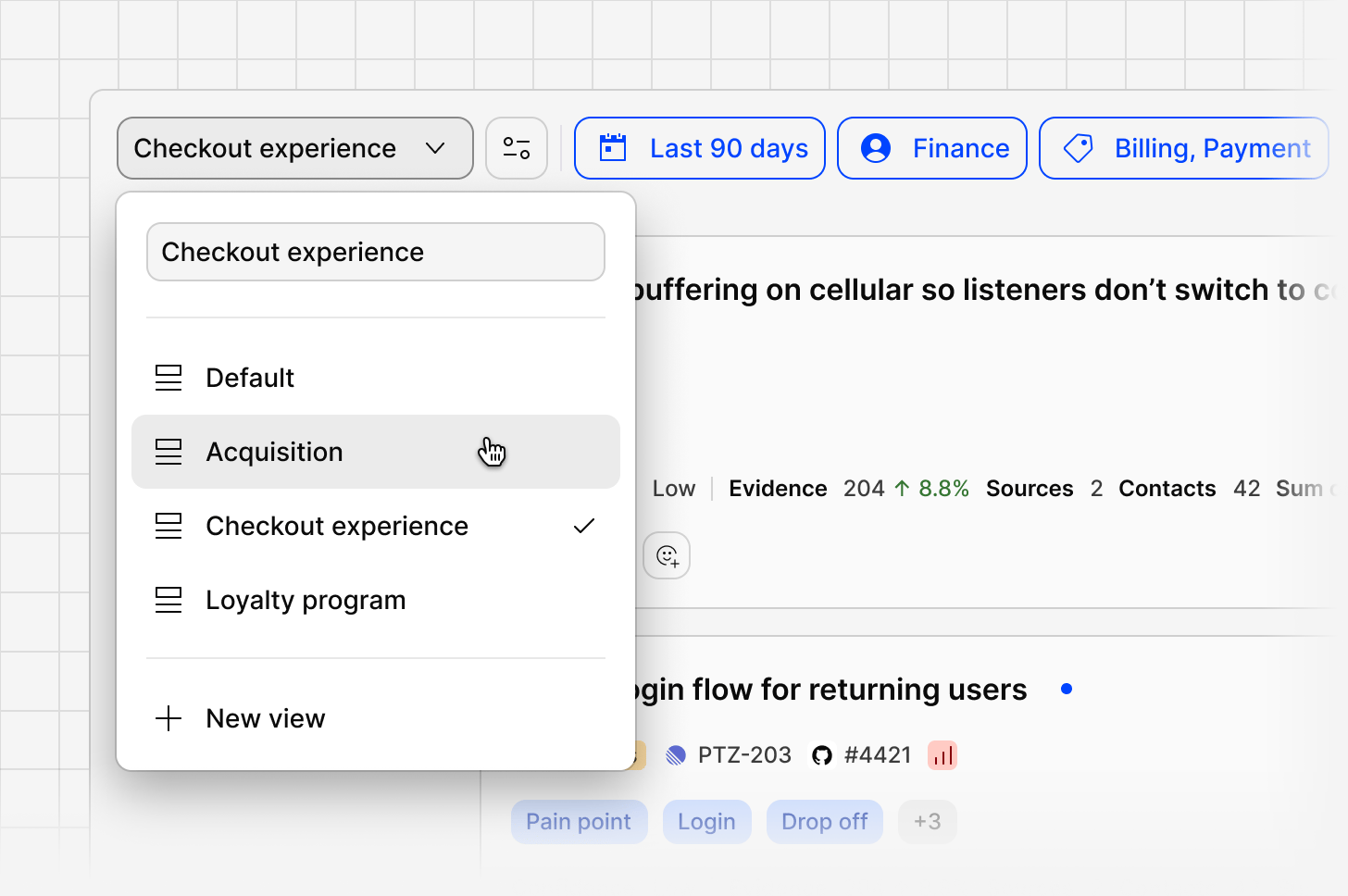
Evidence
Evidence is the full list of data points behind a channel, and the place to verify a signal or find a quote worth using.Activity over time
A calendar-style view shows evidence volume by day, so you can see at a glance when feedback spiked or went quiet.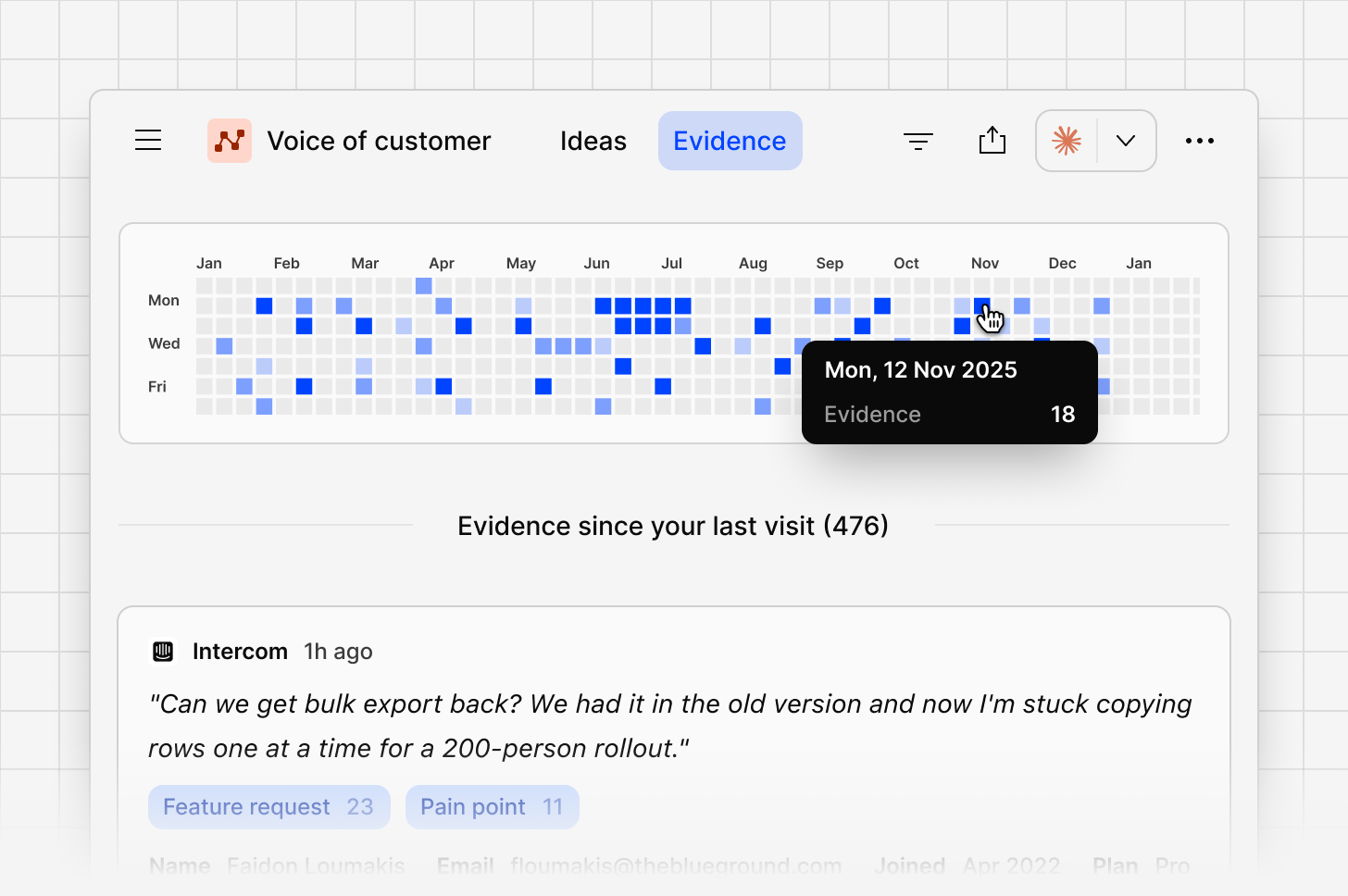
Full evidence list
Every data point across every connected source appears here, most recent first, with a preview of the content and the contact who shared it.Evidence panel
Open a data point to see:- Contact details, if enabled from your Contacts database
- Whether this piece of evidence is already linked to an idea or not.
- The full feedback, including the complete thread if it’s part of a conversation
... More menu on a data point, you can configure which fields are shown, add to idea, or delete evidence.